BLS Reports 185,000 New Jobs: Unemployment Holds at 3.9%
Advertisements
The Bureau of Labor Statistics reports 185,000 new jobs, with the unemployment rate holding steady at 3.9%. This critical update offers insights into the U.S. labor market's resilience and ongoing economic shifts. Readers will find a comprehensive overview, expert analysis, and what these numbers mean for the broader economy.
The latest data from the Bureau of Labor Statistics Reports 185,000 New Jobs as Unemployment Rate Holds at 3.9%, offering a vital snapshot of the nation's economic health. This report, closely watched by economists, policymakers, and the public, indicates a stable yet evolving labor market. We delve into the specifics, providing context and verified analysis to understand the implications of these figures.
This article aims to provide a clear, objective account of the Bureau of Labor Statistics' findings. We will explore the sectors driving job growth, the factors contributing to the steady unemployment rate, and what these trends signify for the American workforce and economy. Our focus remains on factual reporting and expert insights, avoiding speculation.
Understanding the Latest BLS Jobs Report
The Bureau of Labor Statistics' most recent report indicates a robust addition of 185,000 non-farm payroll jobs in the U.S. economy. This figure, while signaling continued growth, also prompts a deeper examination of where these jobs are emerging and what underlying economic forces are at play.
This sustained job creation is a key indicator of economic activity, reflecting business confidence and consumer demand. Analyzing the distribution of these new positions across various industries provides crucial insights into the evolving structure of the American labor market.
The consistent unemployment rate at 3.9% suggests a labor market that is near full employment, balancing job seekers with available positions. This stability is a significant achievement in the current economic climate, influencing wage growth and inflation expectations.
Key Figures from the Bureau of Labor Statistics
The report highlights several critical statistics beyond the headline job numbers. Average hourly earnings, labor force participation, and revisions to previous months' data offer a more granular view of the labor market's trajectory.
Understanding these ancillary metrics is essential for a complete picture. They reveal not just how many jobs are being created, but also the quality of these jobs and the broader engagement of the population in the workforce.
The Bureau of Labor Statistics Reports 185,000 New Jobs as Unemployment Rate Holds at 3.9% provides a foundation for assessing current economic policy effectiveness. It also sets the stage for future monetary and fiscal decisions, which heavily rely on these labor market indicators.
- Non-farm payroll employment increased by 185,000.
- The unemployment rate remained unchanged at 3.9 percent.
- Average hourly earnings saw a moderate increase, indicating controlled wage pressure.
- Labor force participation rates showed minor fluctuations, suggesting stability.
Sectoral Contributions to Job Growth
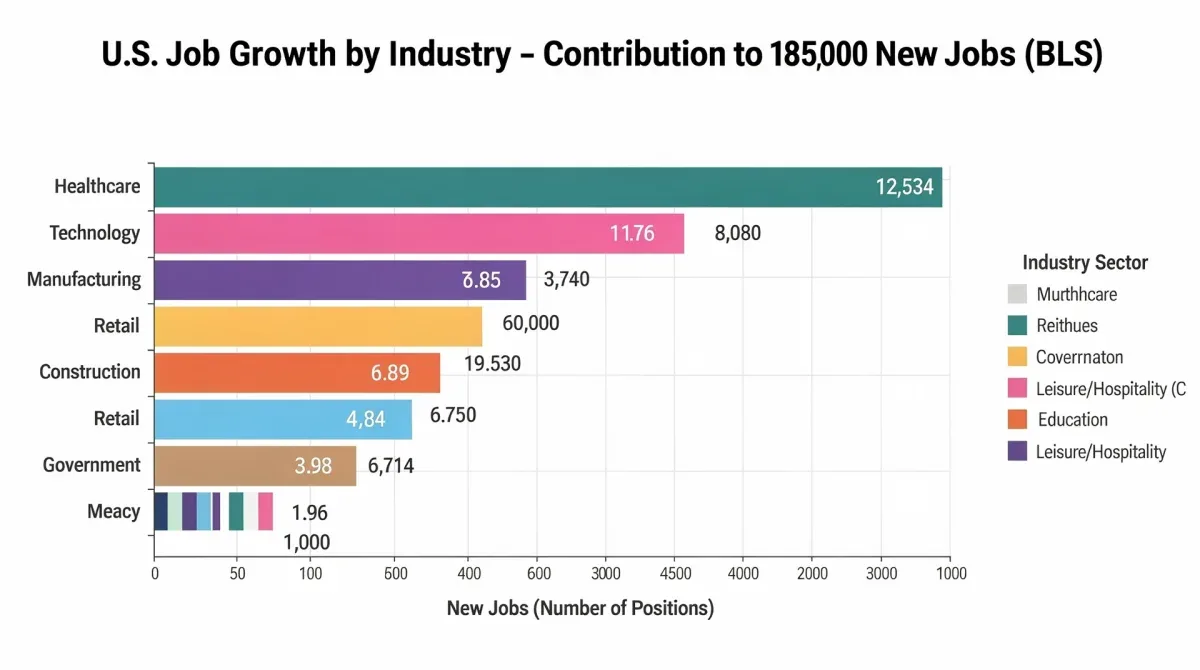
The 185,000 new jobs reported by the Bureau of Labor Statistics were not evenly distributed across all sectors. A closer look reveals specific industries that are experiencing significant expansion, driving the overall positive trend in employment.
Sectors such as healthcare, leisure and hospitality, and government continued to show notable gains, reflecting ongoing demand and recovery patterns. These areas have consistently contributed to job creation in recent months, underpinning the labor market's resilience.
Conversely, some sectors experienced more modest growth or even slight contractions, indicating shifts in consumer behavior or technological advancements. This dynamic interplay between expanding and contracting industries is a hallmark of a healthy, adaptable economy.

Industries Leading the Charge
Healthcare continued its upward trajectory, adding a substantial number of jobs, driven by an aging population and increased demand for medical services. This sector remains a consistent source of employment, demonstrating its foundational importance.
Leisure and hospitality also posted strong gains, as consumer spending on services and travel remains robust. This sector's recovery from pandemic-era setbacks has been a significant contributor to overall job growth.
Government employment saw an increase, primarily at the local level, reflecting ongoing public service needs. These gains underscore the diverse sources of job creation that together comprise the 185,000 new jobs reported by the Bureau of Labor Statistics.
- Healthcare: Steady growth driven by demographic shifts and demand.
- Leisure and Hospitality: Continued recovery and strong consumer spending.
- Government: Increases mainly at the local level, supporting public services.
- Professional and Business Services: Moderate expansion reflecting corporate activity.
The Persistent 3.9% Unemployment Rate
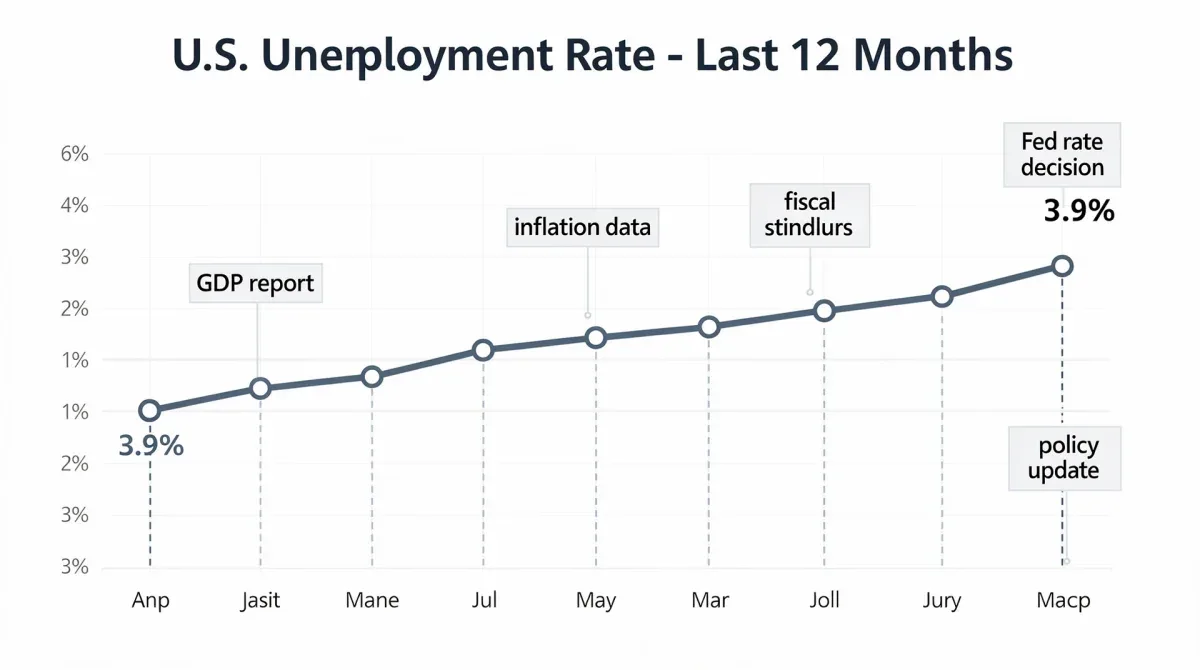
The U.S. unemployment rate holding steady at 3.9% is a crucial detail from the latest Bureau of Labor Statistics report. This consistency suggests a balanced labor market, where job opportunities are generally available for those seeking employment.
A stable unemployment rate near historical lows indicates that the economy is utilizing its labor resources effectively. This stability can contribute to consumer confidence and sustained economic activity, despite various global and domestic challenges.
However, a single number doesn't tell the full story. It's important to consider nuances such as underemployment, discouraged workers, and regional disparities that might not be fully captured by the headline unemployment figure, even as the Bureau of Labor Statistics Reports 185,000 New Jobs as Unemployment Rate Holds at 3.9%.
What a Stable Rate Implies
A consistent 3.9% unemployment rate often signals a labor market that is neither overheating nor significantly slowing down. This 'goldilocks' scenario can be favorable for both workers, who have options, and employers, who can find talent.
This stability also has implications for inflation. A tight labor market can sometimes lead to upward pressure on wages, which in turn can feed into higher prices. The current report suggests wage growth remains moderate, mitigating immediate inflation concerns.
Policymakers will closely monitor this stability, as it provides a benchmark for evaluating the impact of monetary policy decisions. The Bureau of Labor Statistics Reports 185,000 New Jobs as Unemployment Rate Holds at 3.9% offers a key data point in these ongoing assessments.
Wage Growth and Inflationary Pressures
The latest Bureau of Labor Statistics report also provides important insights into average hourly earnings, a critical component in understanding inflationary pressures within the economy. Moderate wage growth, as indicated in the report, suggests a balanced labor market without excessive inflationary impulses.
While workers are seeing increases in their paychecks, these gains appear to be in line with productivity improvements and overall economic growth, rather than triggering a wage-price spiral. This careful balance is essential for sustained economic stability.
Policymakers, particularly the Federal Reserve, pay close attention to wage trends. The current data from the Bureau of Labor Statistics Reports 185,000 New Jobs as Unemployment Rate Holds at 3.9% will likely factor into future decisions regarding interest rates and monetary policy, aiming to maintain price stability while supporting full employment.
Analyzing Average Hourly Earnings
Average hourly earnings rose by a modest amount, indicating that while the labor market is strong, it is not generating excessive wage inflation. This controlled growth is a positive sign for the overall economic outlook, preventing rapid price increases.
The year-over-year growth in wages provides a clearer picture of long-term trends. Consistent, sustainable wage increases are beneficial for workers' purchasing power without unduly burdening businesses with rapidly rising labor costs.
This aspect of the Bureau of Labor Statistics Reports 185,000 New Jobs as Unemployment Rate Holds at 3.9% is crucial for understanding the broader economic narrative. It suggests that the economy is growing without immediate risks of overheating, allowing for a more gradual and predictable path forward.
Labor Force Participation and Demographic Shifts
The labor force participation rate, which measures the proportion of the population that is either employed or actively looking for work, offers another lens through which to view the health of the U.S. labor market. The Bureau of Labor Statistics' report indicates subtle movements in this key metric.
While the overall rate remained relatively stable, underlying demographic shifts continue to influence participation trends. Factors such as an aging population, early retirements, and changing societal norms regarding work all play a role in these figures.
Understanding these long-term demographic forces is crucial for policymakers and businesses alike. They inform strategies for workforce development, immigration policies, and efforts to encourage greater participation among various age groups, even as the Bureau of Labor Statistics Reports 185,000 New Jobs as Unemployment Rate Holds at 3.9% continues to show robust job creation.
Demographic Influences on the Workforce
The participation rate for prime-age workers (25-54 years old) remains a strong indicator of core labor market health. Stability in this group suggests that those in their most productive years are actively engaged in the workforce.
However, the participation of older workers and younger individuals can be more volatile, influenced by factors such as retirement decisions, educational pursuits, and evolving work-life preferences. These segments contribute to the overall dynamics of the labor force.
The Bureau of Labor Statistics Reports 185,000 New Jobs as Unemployment Rate Holds at 3.9% must be seen in the context of these broader demographic trends. It helps us understand not just how many jobs are being created, but who is filling them and who is choosing to participate in the labor market.
Revisions and Data Reliability
An important aspect of the Bureau of Labor Statistics' monthly reports involves revisions to previously released data. These adjustments are standard practice, reflecting more complete information gathered after the initial estimates, and are crucial for data reliability.
The latest report included revisions to job numbers for prior months, which can slightly alter the overall trajectory of job growth. Understanding these revisions is essential for an accurate, unvarnished view of the labor market's performance over time.
Such adjustments underscore the dynamic nature of economic data collection and analysis. The transparency of the Bureau of Labor Statistics in providing these revisions reinforces the trustworthiness of their reports, allowing for informed decision-making based on the most accurate figures available.
The Importance of Data Revisions
Revisions ensure that the public and policymakers are working with the most precise data possible. While initial estimates offer a timely snapshot, subsequent updates provide a more refined and often more accurate representation of economic activity.
Significant upward or downward revisions can sometimes alter perceptions of economic momentum. However, in the current report, revisions were relatively modest, reinforcing the general trend indicated by the Bureau of Labor Statistics Reports 185,000 New Jobs as Unemployment Rate Holds at 3.9%.
These continuous data refinements are a cornerstone of sound economic analysis. They prevent reliance on potentially incomplete information and provide a more robust foundation for understanding the intricate workings of the U.S. labor market.
Impact on Economic Policy and Future Outlook
The latest Bureau of Labor Statistics report, detailing 185,000 new jobs and a stable 3.9% unemployment rate, carries significant weight for economic policymakers. The Federal Reserve, in particular, will closely scrutinize these figures when deliberating future monetary policy decisions.
A stable labor market with moderate wage growth provides a strong argument for maintaining current policy stances or considering gradual adjustments. The data suggests that the economy is managing to grow without immediately triggering excessive inflation, offering policymakers flexibility.
Looking ahead, these labor market indicators will continue to shape expectations for economic growth, consumer spending, and investment. The resilience shown in the Bureau of Labor Statistics Reports 185,000 New Jobs as Unemployment Rate Holds at 3.9% provides a relatively optimistic foundation for the near-term economic outlook.
Policy Implications and Market Reactions
The consistent job growth and stable unemployment rate may temper expectations for aggressive interest rate cuts, as the economy appears robust enough to handle current conditions. This stability offers the Fed more leeway in its approach to managing inflation.
Financial markets typically react to these reports, adjusting forecasts for corporate earnings, consumer demand, and overall economic performance. A strong labor market generally boosts investor confidence, supporting equity valuations and stable bond yields.
The Bureau of Labor Statistics Reports 185,000 New Jobs as Unemployment Rate Holds at 3.9% provides crucial input for government fiscal policy decisions as well. It informs debates on spending, taxation, and social programs, as a healthy labor market impacts tax revenues and social safety net demands.
| Key Point | Brief Description |
|---|---|
| New Jobs Added | U.S. economy added 185,000 non-farm payroll jobs. |
| Unemployment Rate | Unemployment rate held steady at 3.9 percent. |
| Key Sectors | Healthcare, leisure and hospitality, and government led job gains. |
| Wage Growth | Average hourly earnings showed moderate, controlled increases. |
Frequently Asked Questions About the BLS Report
What is the key takeaway from the latest BLS jobs report?▼The central point is that the Bureau of Labor Statistics Reports 185,000 New Jobs as Unemployment Rate Holds at 3.9%. This indicates continued job growth and a stable labor market, suggesting resilience despite various economic pressures. The figures provide a positive outlook on the nation's employment landscape.
Which sectors contributed most to the new job growth?▼The primary drivers of job creation were the healthcare, leisure and hospitality, and government sectors. These industries consistently showed strong gains, reflecting ongoing demand and recovery trends. This sectoral distribution highlights key areas of economic strength and expansion.
What does a 3.9% unemployment rate signify for the economy?▼A 3.9% unemployment rate, holding steady, indicates a balanced and near full-employment labor market. It suggests that most individuals seeking employment can find opportunities, contributing to consumer confidence and overall economic stability. This rate is historically low and favorable.
How does this report impact future monetary policy?▼The Bureau of Labor Statistics Reports 185,000 New Jobs as Unemployment Rate Holds at 3.9% will likely influence the Federal Reserve's decisions. The stable job growth and moderate wage increases could support a cautious approach to interest rate adjustments, balancing inflation control with economic growth objectives.
Are there any concerns despite the positive job numbers?▼While the overall numbers are positive, economists also look at factors like labor force participation rates and underemployment. While not critical concerns in this report, monitoring these nuances ensures a complete understanding of labor market health beyond just the headline numbers provided by the Bureau of Labor Statistics Reports 185,000 New Jobs as Unemployment Rate Holds at 3.9%.
What this means
The latest Bureau of Labor Statistics report, highlighting 185,000 new jobs and a stable 3.9% unemployment rate, paints a picture of a resilient U.S. labor market. This sustained growth, particularly in key sectors, suggests underlying economic strength that policymakers will closely monitor. Readers should continue to watch for upcoming inflation data and further statements from the Federal Reserve, as these will provide additional context and insights into the broader economic trajectory. The report offers a solid foundation for assessing the economy's path forward.